Tidy Desk, Happy Life
By Stefani Langone of Sterilite Corporation
Is your desk overflowing with loose papers, scattered pens, and stray paperclips? If so, it’s worth transforming that cluttered chaos into an orderly, functional workspace. A well‑organized desk doesn’t just look better—it helps you work more efficiently, reduces stress, and makes it easier to find what you need when you need it. Below, we’ll explore practical desktop storage solutions and routines to help you reclaim and maintain a tidy workspace.

Why a Simple Drawer Organizer Can Make a Big Difference
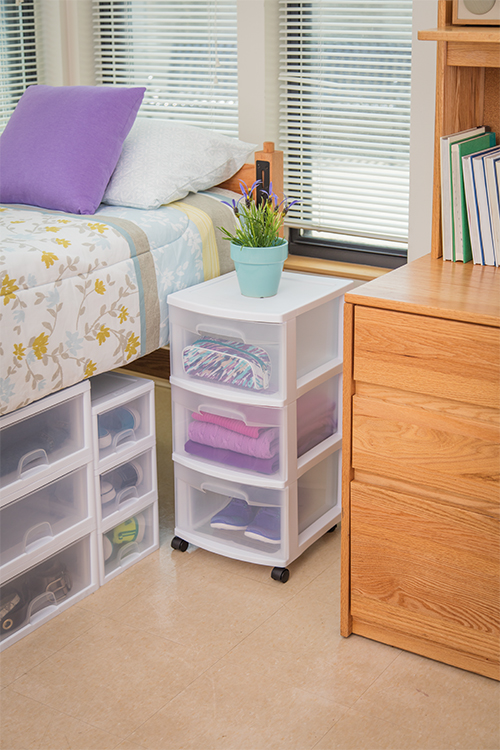
If you find yourself rummaging around for a pen or paperclip on a daily basis, a compact drawer organizer can change that. Our three‑drawer unit offers handy benefits. Each drawer becomes a designated spot—one for pens and pencils, another for sticky notes and notepads, and a third for miscellaneous small supplies like paperclips, rubber bands, or staplers. Because the drawers are clear or easily visible, you can quickly see what’s inside, which saves time and keeps your workflow smooth. For many households, this kind of unit is the easiest first step toward a more organized desk.

When Larger Desktop Storage or Craft Supplies Need Space
If your desktop is shared with craft materials, hobby supplies, or bulky office items, a wider drawer unit offers more flexibility. Our wide three‑drawer organizer can accommodate scissors, glue sticks, tapes, rolls of ribbon, or even 12″×12″ paper—perfect for scrapbooking or creative projects. Because these units can often be stacked, they allow for scalable storage. You can expand capacity as your supplies grow without cluttering your desk surface. This makes them a practical choice for multifunctional workspaces where storage needs change over time.

Compact Storage for Small Spaces or Multi‑use Surfaces
When you’re working with limited space like a small writing desk, a vanity area, or a corner workspace, our small three‑drawer organizer can offer surprisingly powerful storage. These compact units are ideal for organizing items such as essential stationery, jewelry, office supplies, first aid items, or personal and beauty accessories. Because of their modest footprint, they can fit neatly on a shelf, windowsill, or the corner of a desk, making them useful in shared spaces or small apartments.

How to Begin a Declutter and Desk Organization Project
- Empty and sort everything. Begin by removing all items from your desk and drawers. Lay them out and decide what to keep, what to relocate, and what to discard or recycle. This “clean‑slate” approach is favored by many organizing experts.
- Group similar items together. Once emptied, sort items into categories—writing tools, papers, electronics, personal items, etc. Grouping like items helps you see how much of each you really use.
- Assign a home to each category. Use your drawer units (or existing desk drawers) to assign dedicated spots for each category—pens one place, papers another, tech accessories in a separate container. This reduces random piles and keeps your workflow predictable.
This initial step not only transforms chaos into order but also gives you a clearer sense of what you actually use.
4 Tips to Keep Your Desk Tidy Long-term
- Adopt a daily reset routine: At the end of each work (or home‑office) session, take a few minutes to return items to their designated spots, clear loose papers, and wipe down the surface. This simple habit prevents clutter from building up over time.
- Use a zone-based layout: Divide your desk into zones: one for computer/work essentials, another for supplies, and perhaps a personal zone for photos or decor. This structured layout reduces distraction and improves workflow.
- Limit what stays on the surface: Keep only daily essentials—keyboard, monitor, a few tools—on the visible desk. Store the rest in drawers or containers. This minimalist surface helps maintain focus and cuts visual clutter.
- Review periodically: Every few months, reevaluate items stored: discard what’s no longer used, reassign storage if needs changed, and reorganize as needed. This keeps your system aligned with how you actually work now.
Which Desktop Storage Solution Suits You Best?
- If you want to control everyday clutter: A standard three‑drawer organizer keeps frequently used items—pens, notepads, paperclips—easily accessible.
- If you do creative work or craft projects: A wider drawer unit provides space for bulkier supplies and materials while keeping them out of sight yet reachable.
- If you have a small desk or limited space: A compact, small drawer unit offers flexible storage without overwhelming the surface.
- If you want a clean, distraction‑free workspace: Combine a drawer organizer with a disciplined routine and a minimalist layout to keep only essentials on the desk surface.